Check The Ordinary batch code and manufacturing date
Check The Ordinary manufacturing date with the batch code from the bottle, tube or carton. For Glycolic Acid toner, Niacinamide serum and retinoids, read the result alongside the product’s expiry, PAO and storage directions; the manufacturing date does not tell you when a bottle was opened.
The Ordinary prints a separate expiry date on sunscreens and a few other products, so check both the bottle and the carton before you throw the box away.
On The Ordinary packaging, the batch code is the number tied to when the product was made. If the pack also prints a manufacture date (MFG or PROD), that date is more direct.
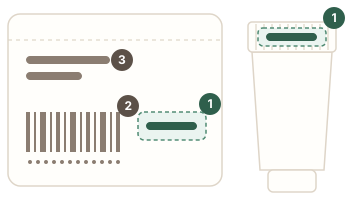
1
Batch code: enter this one
Printed or pressed into the pack apart from the barcode: on the crimped end of a tube, the base of a jar or bottle, or a box flap.
2
Barcode: not the batch code
The long number under the bars. It identifies the product and size, so every unit of it shares the same number.
3
Product numbers: not the batch code
Shade, size and product reference numbers describe the item, not when it was made.
On tubes the code is often pressed into the sealed end without ink. Tilt the tube under a bright light to read it.
Re-type the code exactly as printed. The letters O and I are easy to mix up with the digits 0 and 1.
If the product and its box show different codes, use the one on the product.
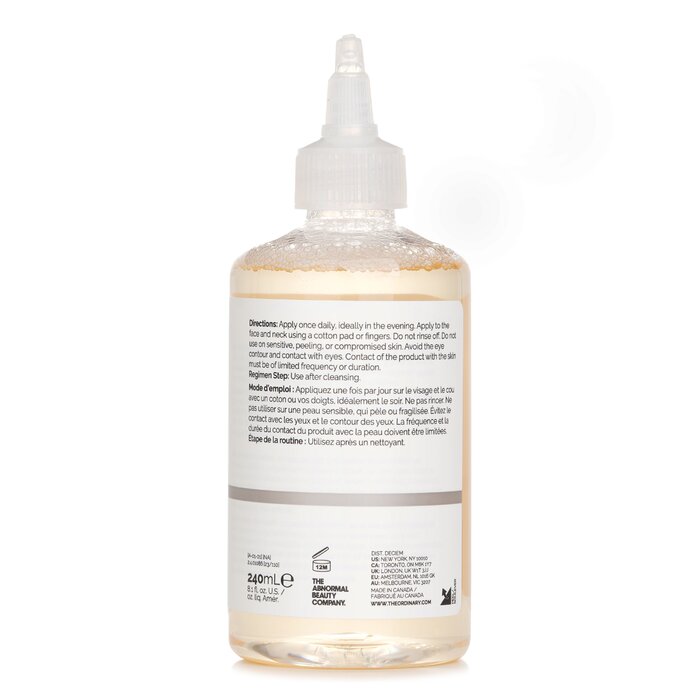
Look for a printed expiry date or the open-jar symbol, such as 12M, which counts from opening.
Ask The Ordinary customer care. Send a clear photo of the code and say where you bought it.
Stop using it if the smell, color or texture has changed, or if it has separated.
Reviewed
Product instructions and packaging
The Ordinary — unopened and opened products
Most formulas have a three-year unopened shelf life at room temperature. Printed expiry takes priority where present; after opening, follow the PAO and formula-specific storage directions.
The open jar near the bottom says 12M: twelve months after opening for this pictured toner. It is not the manufacturing date or the batch code. Other Ordinary formulas can have different directions; check your own bottle.
Enter the manufacturing lot printed on the bottle or carton with The Ordinary selected. Keep letters and leading zeroes intact. The production result and the period after opening answer different questions.
How do I check The Ordinary product expiry?
Use any printed expiry first. For products without one, the brand states three years unopened at room temperature; after opening, use the PAO and formula-specific storage directions rather than the manufacturing date alone.
Do The Ordinary retinol products need refrigeration?
Some Granactive Retinoid and retinol formulas do after opening, but only when the directions for that exact product specify refrigeration.
How do I check The Ordinary Glycolic Acid toner expiry?
Select The Ordinary and enter the manufacturing lot from the bottle or carton, not the 7% concentration or bottle volume. Use any labeled expiry and the PAO on that bottle to interpret the production result; the batch code does not record when you opened it.
Does The Ordinary batch code prove authenticity?
A production date is not authentication. DECIEM says it cannot verify products bought outside its own stores or authorized retailers; check the purchase channel as well as the packaging.
How old The Ordinary products are when checked
The Ordinary products checked on Lot Date were typically dated to about 17 months before the check.
17 monthstypical age when checked (estimated)
10–31 monthsmiddle half of checks
20%dated more than three years before the check
Estimated from Lot Date readings for The Ordinary between Jun 12, 2026 and Oct 9, 2026. Each code counts once per visitor, and readings that can’t be right, such as barcodes or dates after the check, are left out. The figures describe the products people chose to check, not everything The Ordinary sells, and differences between brands partly reflect how precisely each brand’s codes can be dated.
The Ordinary shelf life, PAO and storage by formula
Before you rely on the decoded date
The Ordinary states that sun protection and a few other products carry an expiry on the packaging. For most others, the official unopened shelf life is three years at room temperature; after opening, follow the PAO symbol rather than counting only from manufacture.
Storage is formula-specific. The brand says to keep products cool, dry, and away from direct sunlight, while certain Granactive Retinoid and retinol products require refrigeration after opening when their directions say so.
Recent The Ordinary lookup activity
The Ordinary is one of the most actively checked brands on Lot Date.
These patterns describe lookup activity through Oct 9, 2026, not product authenticity or safety.
Common lookup mistakes
Check the bottle, tube, and carton for a batch mark and a separately labeled expiry before discarding the box.
Close dropper bottles promptly and follow the exact storage line; unexpected odor, color, separation, or texture change matters even when the estimated manufacturing date is recent.
What to check next for The Ordinary
For The Ordinary, combine the decoded date with product type, PAO, storage, and seller context before deciding whether to open, keep, replace, or buy.
Methodology
Understand what the checker can prove
See how Lot Date estimates production timing, where precision drops, and when official packaging should override the result.
Continue with the check that matches the product: find the lot number, review expiry or PAO, separate the batch code from the barcode, or assess sunscreen and fragrance more carefully.
Cosmetic Batch Code Lookup: Find the Right Code
Find the cosmetic batch code on your box, bottle or tube. Separate the lot from barcodes and shade numbers, then choose the brand to check production.
Enter a cosmetic batch number with its brand to check production age. Follow the result with product-specific expiry, unopened-life and PAO instructions.