CeraVe Moisturizing Cream, Daily Moisturizing Lotion, facial cleansers, acne treatments, and sunscreen do not share one expiration rule. Start with any date printed on the exact container—especially SPF—then use the batch estimate to add manufacturing context rather than to replace the label.
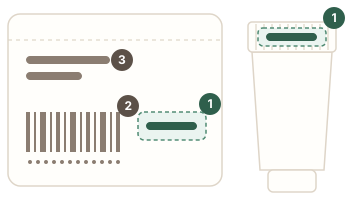
On CeraVe pump bottles and jars, look at the base or rear label; on tubes, look at the crimped end.
On CeraVe packaging, the batch code is the number tied to when the product was made. If the pack also prints a manufacture date (MFG or PROD), that date is more direct.
1
Batch code: enter this one
Printed or pressed into the pack apart from the barcode: on the crimped end of a tube, the base of a jar or bottle, or a box flap.
2
Barcode: not the batch code
The long number under the bars. It identifies the product and size, so every unit of it shares the same number.
3
Product numbers: not the batch code
Shade, size and product reference numbers describe the item, not when it was made.
On tubes the code is often pressed into the sealed end without ink. Tilt the tube under a bright light to read it.
Re-type the code exactly as printed. The letters O and I are easy to mix up with the digits 0 and 1.
If the product and its box show different codes, use the one on the product.
Look for a printed expiry date or the open-jar symbol, such as 12M, which counts from opening.
Ask CeraVe customer care. Send a clear photo of the code and say where you bought it.
Stop using it if the smell, color or texture has changed, or if it has separated.
Reviewed
Product instructions and packaging
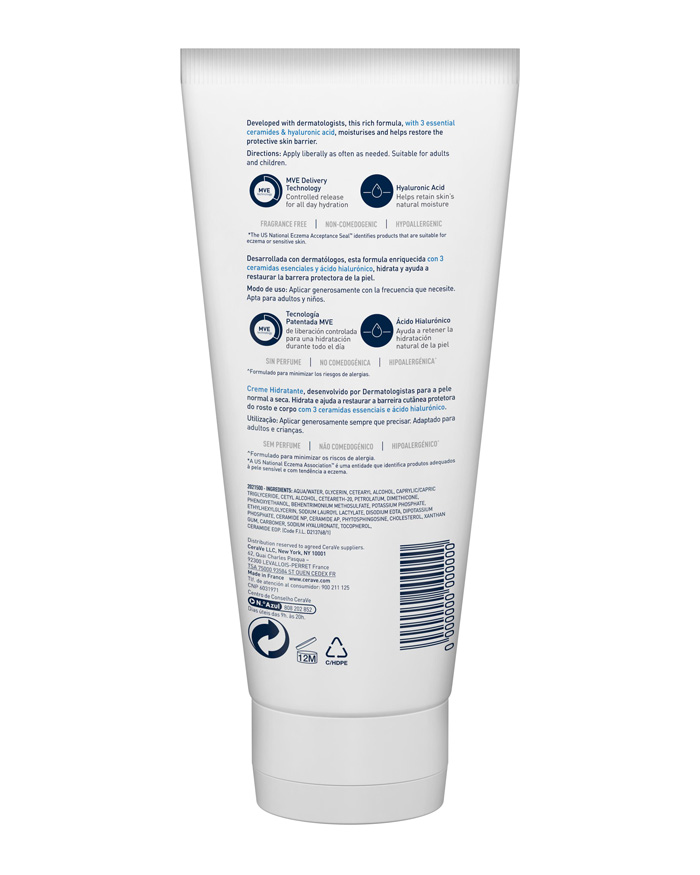
On this tube, 12M beside the open jar is the after-opening period. The barcode and F.I.L. reference are not the lot. Inspect the sealed crimp and other package panels for a separately applied batch mark; no readable production lot is shown in this product image.
How do you read the CeraVe Daily Moisturizing Lotion expiration date when nothing is printed?
No printed date does not mean unlimited shelf life. Check whether your Daily Moisturizing Lotion has a PAO symbol and record the opening date. If neither a date nor usable directions appear, ask CeraVe with the exact product, market and lot rather than applying a sunscreen deadline to the lotion.
How should I check CeraVe Moisturizing Cream in a jar?
Check its own label and opening history, not the date on another CeraVe product. Keep the rim clean and the jar closed. A manufacturing estimate does not account for repeated hand contact, heat exposure or changes since opening.
Can a CeraVe sunscreen batch code replace its printed date?
Follow the expiration printed on the sunscreen. The manufacturing result cannot extend it. Keep sunscreen away from excessive heat and direct sun, as CeraVe advises; do not apply sunscreen instructions as a fixed lifetime for all cleansers and creams.
How old CeraVe products are when checked
CeraVe products checked on Lot Date were typically dated to about 17 months before the check.
17 monthstypical age when checked (estimated)
8–35 monthsmiddle half of checks
25%dated more than three years before the check
Estimated from Lot Date readings for CeraVe between Jun 12, 2026 and Oct 9, 2026. Each code counts once per visitor, and readings that can’t be right, such as barcodes or dates after the check, are left out. The figures describe the products people chose to check, not everything CeraVe sells, and differences between brands partly reflect how precisely each brand’s codes can be dated.
Inspect the base of a pump bottle or jar, the rear label, a tube crimp, and the carton for a manufacturing lot printed or embossed. MVE and ceramide claims, SPF values, product sizes, and UPC barcodes describe the product rather than its production run.
CeraVe advises checking sunscreen packaging for its expiration date and protecting it from direct sun and excessive heat. A cream tub also has more repeated hand contact than a closed lotion pump, so opening history and package hygiene remain important after the batch date is known.
Recent CeraVe lookup activity
CeraVe is one of the most actively checked brands on Lot Date. Recent activity is concentrated in United States.
These patterns describe lookup activity through Oct 9, 2026, not product authenticity or safety.
Common lookup mistakes
Write the opening month on large lotion pumps and Moisturizing Cream tubs that may stay in use for many months.
Keep pump outlets and jar rims clean; replace a formula after persistent separation, an unusual odor or color, damaged packaging, or unexpected irritation.
What to check next for CeraVe
For CeraVe, combine the decoded date with product type, PAO, storage, and seller context before deciding whether to open, keep, replace, or buy.
Methodology
Understand what the checker can prove
See how Lot Date estimates production timing, where precision drops, and when official packaging should override the result.
Continue with the check that matches the product: find the lot number, review expiry or PAO, separate the batch code from the barcode, or assess sunscreen and fragrance more carefully.
Cosmetic Batch Code Lookup: Find the Right Code
Find the cosmetic batch code on your box, bottle or tube. Separate the lot from barcodes and shade numbers, then choose the brand to check production.
Enter a cosmetic batch number with its brand to check production age. Follow the result with product-specific expiry, unopened-life and PAO instructions.