
Is the number on a Jean Paul Gaultier tin the batch code?
Only if it is the compact production mark. Barcodes, volume, and package references are different identifiers.
Jean Paul Gaultier fragrances often use distinctive sculpted bottles and presentation tins or cartons. The lot code is a production clue; decorative packaging and long retail identifiers are not.
For Jean Paul Gaultier, check the base or lower label of the bottle and the presentation tin or carton, and photograph both codes before you throw the packaging away.
On Jean Paul Gaultier packaging, the batch code is the number tied to when the bottle was made. If the box also prints a manufacture date (MFG or PROD), that date is more direct.
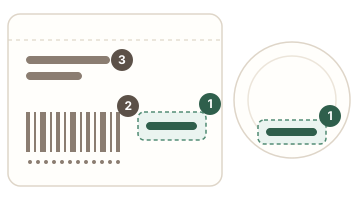
Printed, stamped or laser-etched apart from the barcode, usually on the box flap and the base of the bottle.
The long number under the bars. It identifies the fragrance and size, so every bottle of it shares the same number.
Reference, volume and concentration labels such as EDP or EDT describe the item, not when it was made.
The codes on the box and the bottle usually match. If they don’t, ask the seller why.
Reviewed
Only if it is the compact production mark. Barcodes, volume, and package references are different identifiers.
Yes. Use production timing with storage, atomizer, leakage, and persistent scent changes when clarity cannot be inspected.
No. It can expose an inconsistent date or package mark, but authenticity still depends on provenance and physical inspection.
Jean Paul Gaultier products checked on Lot Date were typically dated to about 18 months before the check.
Estimated from Lot Date readings for Jean Paul Gaultier between Jun 12, 2026 and Oct 10, 2026. Each code counts once per visitor, and readings that can’t be right, such as barcodes or dates after the check, are left out. The figures describe the products people chose to check, not everything Jean Paul Gaultier sells, and differences between brands partly reflect how precisely each brand’s codes can be dated.
Jean Paul Gaultier is frequently checked on Lot Date.
These patterns describe lookup activity through Oct 10, 2026, not product authenticity or safety.
For Jean Paul Gaultier, combine the decoded date with product type, PAO, storage, and seller context before deciding whether to open, keep, replace, or buy.
See how Lot Date estimates production timing, where precision drops, and when official packaging should override the result.
Read methodologyUse a locating guide before retrying if the printed code is faint, split across the box and bottle, or easy to confuse with barcode data.
Open guide: How to Find Cosmetic Batch Codes and Lot Numbers on PackagingUse an expiry guide when production timing alone is not enough to decide whether to open, keep, or replace the product.
Open guide: How to Check Cosmetic Expiry Date from Batch Code, PAO, and PackagingUse a risk guide when the item comes from marketplace stock, duty-free inventory, resale, or a seller you do not fully trust.
Open guide: Does a Batch Code Prove Authenticity? Can a Cosmetic Code Be Fake?Continue with the check that matches the product: find the lot number, review expiry or PAO, separate the batch code from the barcode, or assess sunscreen and fragrance more carefully.
Find the cosmetic batch code on your box, bottle or tube. Separate the lot from barcodes and shade numbers, then choose the brand to check production.
Cosmetic Batch Code Lookup: Find the Right CodeFind and copy the cosmetic lot number from your tube, jar or box. Keep kit components separate, then select the brand in Lot Date to check production.
Cosmetic Lot Number Search | Find a Lot Code by BrandRead a cosmetic expiration date or PAO symbol. Compare sunscreen, jelly and opened skincare labels, then check the batch code for production age.
Cosmetic Expiration & Expiry Date CheckerEnter a cosmetic batch number with its brand to check production age. Follow the result with product-specific expiry, unopened-life and PAO instructions.
Cosmetic Expiry Date from Batch NumberUse the app to save results, manage opened dates, and avoid losing track of older backups.